 top wrestler
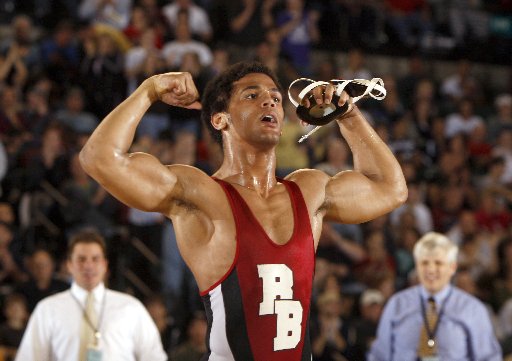 top wrestler
 top wrestler
 wrestler
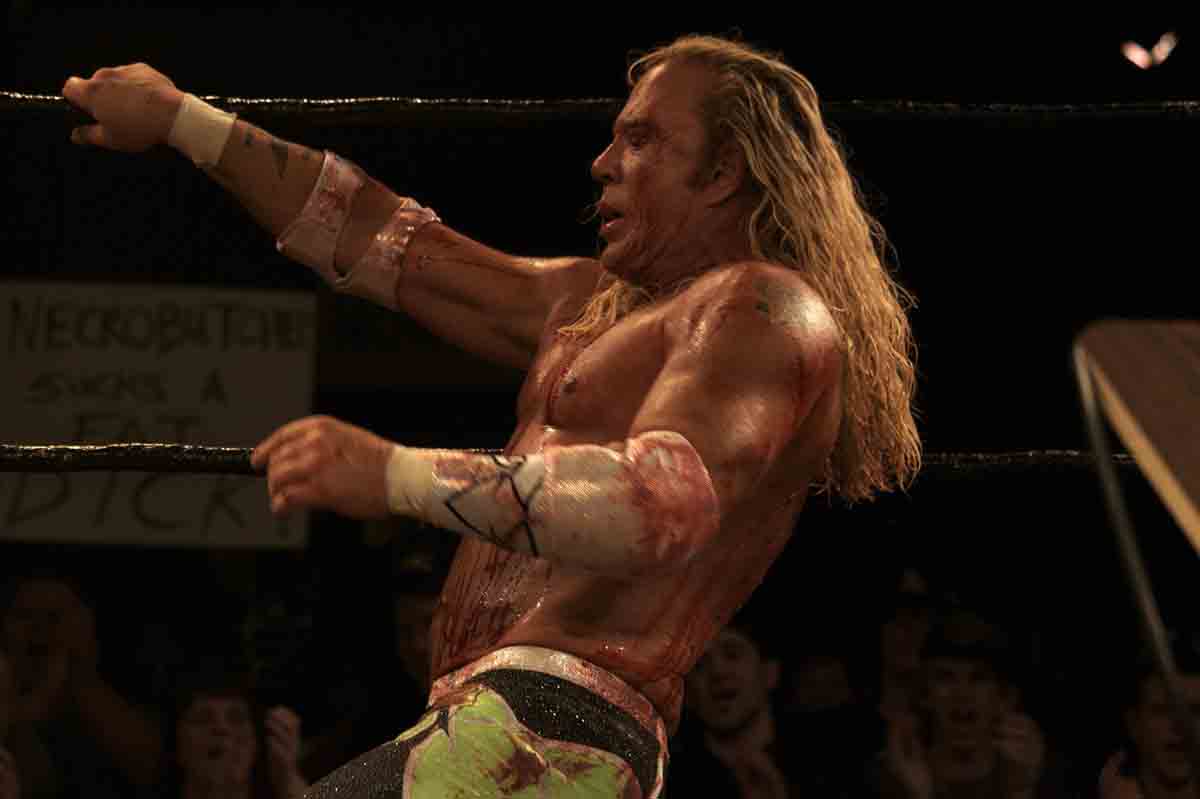 top wrestler


Mention pro wrestling in public and you're likely to get a livelier debate than you would with politics or philosophy. Is it a sport or a show? Is it real or fake? Who was the greatest wrestler ever? Where is "Parts Unknown"?
By the time you're done reading this article, you'll have enough pro wresting knowledge to put anyone who disagrees with you into a Sleeper Hold, unable to budge the Iron Claw of your logic.
You'll learn how wrestling got started and how wrestlers accomplish seemingly superhuman feats without killing themselves and each other. You'll also learn about the top stars of the past and present. And if you're already an expert on all things in the squared circle, you'll discover that the action behind the scenes is often more bizarre and convoluted that what goes on in the ring.
The Basics
The basic idea of wrestling -- two people competing in a physical combat -- is ancient. The Greeks engaged in a form of wrestling that has survived today as freestyle wrestling. The Roman Empire adopted elements of Greek wrestling with an emphasis on brute strength. The resulting form, known as Greco-Roman wrestling, requires wrestlers to perform all moves on the upper body only. Freestyle and Greco-Roman wrestling are the two international amateur forms practiced today in the Olympic Games. They have clear rules and weight classes. Points determine winners, and violations result in disqualifications. You can find more information on the rules of amateur wrestling here.
 A Greco-Roman wresting match held during the 2004 Armed Forces Wrestling Championship in New Orleans, Louisiana. |
How is professional wrestling different? Unlike amateurs, professional wrestlers are paid. They also tend to be more skilled. A sporting commission regulates amateur wrestling, but pro wrestling is intentionally unregulated. In its early days, wrestling fell under the state sporting commission authority. League owners soon realized that they could avoid the hassle by classifying their shows as entertainment, not a competitive sport.
 WWE Raw superstar Kurt Angle began his career as an amateur wrestler, winning Olympic gold in Atlanta in 1996 (he often wears his medal in the ring, as show here). He shocked the amateur wrestling world when he turned pro. |
Wrestling does have rules, which we'll explain in more detail later. However, the rules are loosely defined and loosely enforced. The skills of the wrestlers do not determine the outcome of the match. Instead, writers work on plots and storylines well in advance, and every match is another chapter in the story. Who wins and who loses is all in the script.

Wrestling is part of the martial arts. A wrestling match consists of physical engagement between two people in which each wrestler strives to get an advantage over, or control of, the opponent. Physical techniques used, include clinching, holding, locking, application of leverage and takedowns. Today there are a wide range of styles with varying rules.
Particular wrestling styles, have particular rules. Also, one can distinguish between traditional and non-traditional styles of wrestling, and wrestling techniques found in military hand-to-hand combat and self-defence systems.
Wrestling disciplines defined by FILA, are broken down into two categories; International wrestling disciplines and folk wrestling disciplines. According to the International Federation of Associated Wrestling Styles, there are five current International wrestling disciplines acknowledged throughout the world. They are Greco-Roman Wrestling, Freestyle Wrestling, Grappling, Beach wrestling and Sambo.[10]
Greco-Roman is an international discipline and an Olympic sport. “In Greco-Roman style, it is forbidden to hold the opponent below the belt, to make trips, and to actively use the legs in the execution of any action.” Recent rule changes in Greco-Roman increase opportunities for and place greater emphasis on explosive, ‘high amplitude’ throws. Pinning ones opponent to the mat, is one way of winning. One of the most well known Greco-Roman wrestlers is Alexander Karelin from Russia.
Freestyle wrestling is international discipline and an Olympic sport, for both men and women. This style allows the use of the wrestler’s or his opponent’s legs in offense and defense. Freestyle wrestling, has its greatest origins in catch-as-catch-can wrestling and the prime victory condition in this styles involves the wrestler winning by pinning his opponent on the mat. American high school and college wrestling is conducted under different rules and is termed scholastic and collegiate wrestling. Outside the U.S., one can find professional wrestlers who compete by the rules of freestyle wrestling.
Submission wrestling is a wrestling style that consists of controlling the opponent without using striking and also includes the use of submission holds, it is also be referred to as grappling or “submission grappling.” It starts from a standing position or on the ground after a throw, and the goal is to make the opponent submit via the use of immobilization techniques such as locks. Grappling, differing from the FILA definition, plays an important role in the practice of Mixed Martial Arts (MMA) and can be used as a self-defence technique. It brings together techniques from Brazilian jiu-jitsu (no-Gi), Freestyle Wrestling, Folk American Wrestling (catch-as-catch-can), Sambo and judo.[11]
Apparently in a bid to give wrestling greater appeal to television audiences, FILA adopted beach wrestling as an official discipline during 2004–2005. Beach wrestling is standing wrestling done by wrestlers, male or female, inside a sand-filled circle measuring 6 meters (20 ft) in diameter with only two weight categories, heavy and light. The objective is to throw an opponent or take the opponent to their back. The wrestlers wear swimsuits rather than special wrestling uniforms. Wrestlers may also wear spandex or athletic shorts.[12][13]
Sambo is a martial art that originated in the Soviet Union (particular Russia) in the 20th century. It is an acronym for “self-defence without weapons” in Russian and had its origins in the Soviet armed forces. Its influences are varied, with techniques borrowed from sports ranging from the two international styles of Greco-Roman and freestyle to judo, jujutsu, European styles of folk wrestling, and even fencing. The rules for sport sambo are similar to those allowed in competitive judo, with a variety of leglocks and defense holds from the various national wrestling styles in the Soviet Union, while not allowing chokeholds.[14]
Khuresh (Tuvan wrestling)
Folk wrestling describes a traditional form of wrestling unique to a culture or geographic region of the world. Examples of the many styles of folk wrestling, include Backhold Wrestling (from Europe), Catch-as-catch-can (from England), Kurash from Uzbekistan, Gushteengiri from Tajikistan, Khuresh from Siberia, Lotta Campidanese from Italy, Pahlavani from Iran, Pehlwani from India, Penjang Gulat from Indonesia, Schwingen from Switzerland, Shuai jiao from China, Ssireum from Korea, and Yağlı güreş (Turkish oil wrestling).
Folk wrestling styles are not recognized as international styles of wrestling, by FILA.
Collegiate wrestling (sometimes known as scholastic wrestling or folkstyle wrestling) is the commonly used name of wrestling practiced at the college and university level in the United States. This style, with modifications, is also practiced at the high school and middle school levels, and also for younger participants. The term is used to distinguish the style from other styles of wrestling used in other parts of the world, and from those of the Olympic Games: Greco-Roman wrestling, and Freestyle wrestling. Some high schools in the U.S. have developed junior varsity and freshman teams alongside varsity teams. Junior varsity and freshman wrestling teams restrict competitors not only by weight, but also by age and the amount of wrestling a competitor can partake in. For example, some junior varsity and freshman competitors are not allowed in tournament competition due to the amount of mat time a wrestler would accrue in a short time period.
There are currently several organizations which oversee collegiate wrestling competition: Divisions I, II, and III of the NCAA, the NJCAA, the NAIA, and the NCWA. NCAA Division I wrestling is considered the most prestigious and challenging level of competition. A school chooses which athletic organization to join, although it may compete against teams from other levels and organizations during regular-season competition. The collegiate season starts in October or November and culminates with the NCAA tournament held in March.[15]
Professional competitive wrestling is uncommon. Professional wrestling refers in practice to “sports entertainment”, where matches are commonly ‘worked’ to an arranged outcome, as a result of staged combat.
Professional wrestling, can often be refer to as sports entertainment, which has predetermined outcomes. In some promotions, “feuds” are used to build up a championship match. Performers mostly utilize the traditional Anglo-American catch wrestling holds.
Japanese professional wrestling, also known as puroresu, is treated as a sport rather than the entertainment style of wrestling found in North America. There are no storylines, feuds or any sort of angle found in puroresu. The matches are all about athleticism and skill. Another technique found in puroresu is that most of the wrestlers use shoot style strikes and complex submission moves. This means that the wrestlers are more prone to injury. Popular Japanese wrestlers include Kenta Kobashi, Tiger Mask, The Great Muta, Jun Akiyama, Jushin “Thunder” Liger, and KENTA.
Grappling and striking skills are both of importance in mixed martial arts competitions. Fighters who were accomplished wrestlers, gained respect during the early stages of MMA development.[16] Some of these, went on to win several early Ultimate Fighting Championships (UFC 5, 6, 8, 9, 10, 12).[16] and fighters from non-wrestling backgrounds had pursued wrestling training to complement their other skills.[citation needed]
Successful fighters in modern MMA who began their training in various forms of wrestling, include Brock Lesnar, the current UFC heavyweight champion who was a NCAA wrestling champion in 2000 and achieved 2nd place 1999,[17] and former champions Dan Henderson, of PRIDE FC and Randy Couture, a multi-time UFC champion, both of whom competed extensively in collegiate and Greco-Roman wrestling before beginning their careers in mixed martial arts.
1. ^ Miller, Christopher, Submission Fighting and the Rules of Ancient Greek Wrestling, http://historical-pankration.com/articles_wrestling.html, retrieved on 2007-10-08
2. ^ a b “Wrestling, Freestyle” by Michael B. Poliakoff from Encyclopedia of World Sport: From Ancient Times to the Present, Vol. 3, p. 1193, eds. David Levinson and Karen Christensen (Santa Barbara, CA: ABC-CLIO, Inc., 1996).
3. ^ a b “Wrestling, Freestyle” by Michael B. Poliakoff from Encyclopedia of World Sport: From Ancient Times to the Present, Vol. 3, p. 1190, eds. David Levinson and Karen Christensen (Santa Barbara, CA: ABC-CLIO, Inc., 1996).
4. ^ Encyclopædia Britannica,1981,p.1026
5. ^ International Federation of Associated Wrestling Styles. “Greco-Roman Wrestling”. FILA. http://www.fila-wrestling.com/index.php?option=com_content&task=view&id=18&Itemid=36. Retrieved on 2007-08-09.
6. ^ “Wrestling, Greco-Roman” by Michael B. Poliakoff from Encyclopedia of World Sport: From Ancient Times to the Present, Vol. 3, p. 1194, eds. David Levinson and Karen Christensen (Santa Barbara, CA: ABC-CLIO, Inc., 1996).
7. ^ Dictionary.com. “Definitions of “wrestle” from various online dictionaries: Dictionary.com”. Dictionary.com. http://dictionary.reference.com/search?q=wrestle. Retrieved on 2007-10-08.
8. ^ Merriam-Webster. “Definition of “wrestling”: Merriam-Webster Online Dictionary”. Merriam-Webster. http://www.m-w.com/dictionary/wrestling. Retrieved on 2007-10-08.
9. ^ Lexico Publishing Group, LLC. “Entries on “fighting” and “martial art” from the Roget’s New Millennium Thesaurus, First Edition (v. 1.3.1)”. Lexico Publishing Group, LLC. http://thesaurus.reference.com/browse/wrestling. Retrieved on 2007-10-08.
10. ^ International Federation of Associated Wrestling Styles. “Website of the International Federation of Associated Wrestling Styles (FILA)”. FILA. http://www.fila-wrestling.com. Retrieved on 2007-08-09.
11. ^ International Federation of Associated Wrestling Styles. “Grappling”. FILA. http://www.fila-wrestling.com/index.php?option=com_content&task=view&id=111&Itemid=103. Retrieved on 2007-08-09.
12. ^ International Federation of Associated Wrestling Styles. “Introduction of “Beach Wrestling” in the FILA Programme” (PDF). FILA. http://www.fila-wrestling.com/images/documents/regles/Beach_wrestling_rules.pdf. Retrieved on 2007-10-08.
13. ^ Mihoces, Gary (2005-07-11). “Wrestling’s New World Rises from Sand”. USA Today. http://www.usatoday.com/sports/olympics/summer/2005-07-11-beach-wrestling_x.htm. Retrieved on 2007-10-08.
14. ^ International Federation of Associated Wrestling Styles. “Sambo”. FILA. http://www.fila-wrestling.com/index.php?option=com_content&task=view&id=106&Itemid=102. Retrieved on 2007-08-09.
15. ^ “Wrestling, Freestyle” by Michael B. Poliakoff from Encyclopedia of World the Sport: From Ancient Times to the Present, Vol. 3, p. 1192, eds. David Levinson and Karen Christensen (Santa Barbara, CA: ABC-CLIO, Inc., 1996).
16. ^ a b Krauss, Erich (1 December 2004). Warriors of the Ultimate Fighting Championship. Citadel Press Inc.,. ISBN 0806526572.
17. ^ “Grappling with his future”. ESPN. http://sports.espn.go.com/nfl/newsstory?id=1830855. Retrieved on 2008-10-27.
18. ^ Hemmelgran, Melinda. “Nutrient Needs of Young Athletes.” The Elementary School Journal: Sports and Physical Education 91 (1991): 445-56.
Wrestling is part of the martial arts. A wrestling match consists of physical engagement between two people in which each wrestler strives to get an advantage over, or control of, the opponent. Physical techniques used, include clinching, holding, locking, application of leverage and takedowns. Today there are a wide range of styles with varying rules.
Particular wrestling styles, have particular rules. Also, one can distinguish between traditional and non-traditional styles of wrestling, and wrestling techniques found in military hand-to-hand combat and self-defence systems.
Wrestling disciplines defined by FILA, are broken down into two categories; International wrestling disciplines and folk wrestling disciplines. According to the International Federation of Associated Wrestling Styles, there are five current International wrestling disciplines acknowledged throughout the world. They are Greco-Roman Wrestling, Freestyle Wrestling, Grappling, Beach wrestling and Sambo.[10]
Greco-Roman is an international discipline and an Olympic sport. “In Greco-Roman style, it is forbidden to hold the opponent below the belt, to make trips, and to actively use the legs in the execution of any action.” Recent rule changes in Greco-Roman increase opportunities for and place greater emphasis on explosive, ‘high amplitude’ throws. Pinning ones opponent to the mat, is one way of winning. One of the most well known Greco-Roman wrestlers is Alexander Karelin from Russia.
Freestyle wrestling is international discipline and an Olympic sport, for both men and women. This style allows the use of the wrestler’s or his opponent’s legs in offense and defense. Freestyle wrestling, has its greatest origins in catch-as-catch-can wrestling and the prime victory condition in this styles involves the wrestler winning by pinning his opponent on the mat. American high school and college wrestling is conducted under different rules and is termed scholastic and collegiate wrestling. Outside the U.S., one can find professional wrestlers who compete by the rules of freestyle wrestling.
Submission wrestling is a wrestling style that consists of controlling the opponent without using striking and also includes the use of submission holds, it is also be referred to as grappling or “submission grappling.” It starts from a standing position or on the ground after a throw, and the goal is to make the opponent submit via the use of immobilization techniques such as locks. Grappling, differing from the FILA definition, plays an important role in the practice of Mixed Martial Arts (MMA) and can be used as a self-defence technique. It brings together techniques from Brazilian jiu-jitsu (no-Gi), Freestyle Wrestling, Folk American Wrestling (catch-as-catch-can), Sambo and judo.[11]
Apparently in a bid to give wrestling greater appeal to television audiences, FILA adopted beach wrestling as an official discipline during 2004–2005. Beach wrestling is standing wrestling done by wrestlers, male or female, inside a sand-filled circle measuring 6 meters (20 ft) in diameter with only two weight categories, heavy and light. The objective is to throw an opponent or take the opponent to their back. The wrestlers wear swimsuits rather than special wrestling uniforms. Wrestlers may also wear spandex or athletic shorts.[12][13]
Sambo is a martial art that originated in the Soviet Union (particular Russia) in the 20th century. It is an acronym for “self-defence without weapons” in Russian and had its origins in the Soviet armed forces. Its influences are varied, with techniques borrowed from sports ranging from the two international styles of Greco-Roman and freestyle to judo, jujutsu, European styles of folk wrestling, and even fencing. The rules for sport sambo are similar to those allowed in competitive judo, with a variety of leglocks and defense holds from the various national wrestling styles in the Soviet Union, while not allowing chokeholds.[14]
Khuresh (Tuvan wrestling)
Folk wrestling describes a traditional form of wrestling unique to a culture or geographic region of the world. Examples of the many styles of folk wrestling, include Backhold Wrestling (from Europe), Catch-as-catch-can (from England), Kurash from Uzbekistan, Gushteengiri from Tajikistan, Khuresh from Siberia, Lotta Campidanese from Italy, Pahlavani from Iran, Pehlwani from India, Penjang Gulat from Indonesia, Schwingen from Switzerland, Shuai jiao from China, Ssireum from Korea, and Yağlı güreş (Turkish oil wrestling).
Folk wrestling styles are not recognized as international styles of wrestling, by FILA.
Collegiate wrestling (sometimes known as scholastic wrestling or folkstyle wrestling) is the commonly used name of wrestling practiced at the college and university level in the United States. This style, with modifications, is also practiced at the high school and middle school levels, and also for younger participants. The term is used to distinguish the style from other styles of wrestling used in other parts of the world, and from those of the Olympic Games: Greco-Roman wrestling, and Freestyle wrestling. Some high schools in the U.S. have developed junior varsity and freshman teams alongside varsity teams. Junior varsity and freshman wrestling teams restrict competitors not only by weight, but also by age and the amount of wrestling a competitor can partake in. For example, some junior varsity and freshman competitors are not allowed in tournament competition due to the amount of mat time a wrestler would accrue in a short time period.
There are currently several organizations which oversee collegiate wrestling competition: Divisions I, II, and III of the NCAA, the NJCAA, the NAIA, and the NCWA. NCAA Division I wrestling is considered the most prestigious and challenging level of competition. A school chooses which athletic organization to join, although it may compete against teams from other levels and organizations during regular-season competition. The collegiate season starts in October or November and culminates with the NCAA tournament held in March.[15]
Professional competitive wrestling is uncommon. Professional wrestling refers in practice to “sports entertainment”, where matches are commonly ‘worked’ to an arranged outcome, as a result of staged combat.
Professional wrestling, can often be refer to as sports entertainment, which has predetermined outcomes. In some promotions, “feuds” are used to build up a championship match. Performers mostly utilize the traditional Anglo-American catch wrestling holds.
Japanese professional wrestling, also known as puroresu, is treated as a sport rather than the entertainment style of wrestling found in North America. There are no storylines, feuds or any sort of angle found in puroresu. The matches are all about athleticism and skill. Another technique found in puroresu is that most of the wrestlers use shoot style strikes and complex submission moves. This means that the wrestlers are more prone to injury. Popular Japanese wrestlers include Kenta Kobashi, Tiger Mask, The Great Muta, Jun Akiyama, Jushin “Thunder” Liger, and KENTA.
Grappling and striking skills are both of importance in mixed martial arts competitions. Fighters who were accomplished wrestlers, gained respect during the early stages of MMA development.[16] Some of these, went on to win several early Ultimate Fighting Championships (UFC 5, 6, 8, 9, 10, 12).[16] and fighters from non-wrestling backgrounds had pursued wrestling training to complement their other skills.[citation needed]
Successful fighters in modern MMA who began their training in various forms of wrestling, include Brock Lesnar, the current UFC heavyweight champion who was a NCAA wrestling champion in 2000 and achieved 2nd place 1999,[17] and former champions Dan Henderson, of PRIDE FC and Randy Couture, a multi-time UFC champion, both of whom competed extensively in collegiate and Greco-Roman wrestling before beginning their careers in mixed martial arts.
1. ^ Miller, Christopher, Submission Fighting and the Rules of Ancient Greek Wrestling, http://historical-pankration.com/articles_wrestling.html, retrieved on 2007-10-08
2. ^ a b “Wrestling, Freestyle” by Michael B. Poliakoff from Encyclopedia of World Sport: From Ancient Times to the Present, Vol. 3, p. 1193, eds. David Levinson and Karen Christensen (Santa Barbara, CA: ABC-CLIO, Inc., 1996).
3. ^ a b “Wrestling, Freestyle” by Michael B. Poliakoff from Encyclopedia of World Sport: From Ancient Times to the Present, Vol. 3, p. 1190, eds. David Levinson and Karen Christensen (Santa Barbara, CA: ABC-CLIO, Inc., 1996).
4. ^ Encyclopædia Britannica,1981,p.1026
5. ^ International Federation of Associated Wrestling Styles. “Greco-Roman Wrestling”. FILA. http://www.fila-wrestling.com/index.php?option=com_content&task=view&id=18&Itemid=36. Retrieved on 2007-08-09.
6. ^ “Wrestling, Greco-Roman” by Michael B. Poliakoff from Encyclopedia of World Sport: From Ancient Times to the Present, Vol. 3, p. 1194, eds. David Levinson and Karen Christensen (Santa Barbara, CA: ABC-CLIO, Inc., 1996).
7. ^ Dictionary.com. “Definitions of “wrestle” from various online dictionaries: Dictionary.com”. Dictionary.com. http://dictionary.reference.com/search?q=wrestle. Retrieved on 2007-10-08.
8. ^ Merriam-Webster. “Definition of “wrestling”: Merriam-Webster Online Dictionary”. Merriam-Webster. http://www.m-w.com/dictionary/wrestling. Retrieved on 2007-10-08.
9. ^ Lexico Publishing Group, LLC. “Entries on “fighting” and “martial art” from the Roget’s New Millennium Thesaurus, First Edition (v. 1.3.1)”. Lexico Publishing Group, LLC. http://thesaurus.reference.com/browse/wrestling. Retrieved on 2007-10-08.
10. ^ International Federation of Associated Wrestling Styles. “Website of the International Federation of Associated Wrestling Styles (FILA)”. FILA. http://www.fila-wrestling.com. Retrieved on 2007-08-09.
11. ^ International Federation of Associated Wrestling Styles. “Grappling”. FILA. http://www.fila-wrestling.com/index.php?option=com_content&task=view&id=111&Itemid=103. Retrieved on 2007-08-09.
12. ^ International Federation of Associated Wrestling Styles. “Introduction of “Beach Wrestling” in the FILA Programme” (PDF). FILA. http://www.fila-wrestling.com/images/documents/regles/Beach_wrestling_rules.pdf. Retrieved on 2007-10-08.
13. ^ Mihoces, Gary (2005-07-11). “Wrestling’s New World Rises from Sand”. USA Today. http://www.usatoday.com/sports/olympics/summer/2005-07-11-beach-wrestling_x.htm. Retrieved on 2007-10-08.
14. ^ International Federation of Associated Wrestling Styles. “Sambo”. FILA. http://www.fila-wrestling.com/index.php?option=com_content&task=view&id=106&Itemid=102. Retrieved on 2007-08-09.
15. ^ “Wrestling, Freestyle” by Michael B. Poliakoff from Encyclopedia of World the Sport: From Ancient Times to the Present, Vol. 3, p. 1192, eds. David Levinson and Karen Christensen (Santa Barbara, CA: ABC-CLIO, Inc., 1996).
16. ^ a b Krauss, Erich (1 December 2004). Warriors of the Ultimate Fighting Championship. Citadel Press Inc.,. ISBN 0806526572.
17. ^ “Grappling with his future”. ESPN. http://sports.espn.go.com/nfl/newsstory?id=1830855. Retrieved on 2008-10-27.
18. ^ Hemmelgran, Melinda. “Nutrient Needs of Young Athletes.” The Elementary School Journal: Sports and Physical Education 91 (1991): 445-56.


